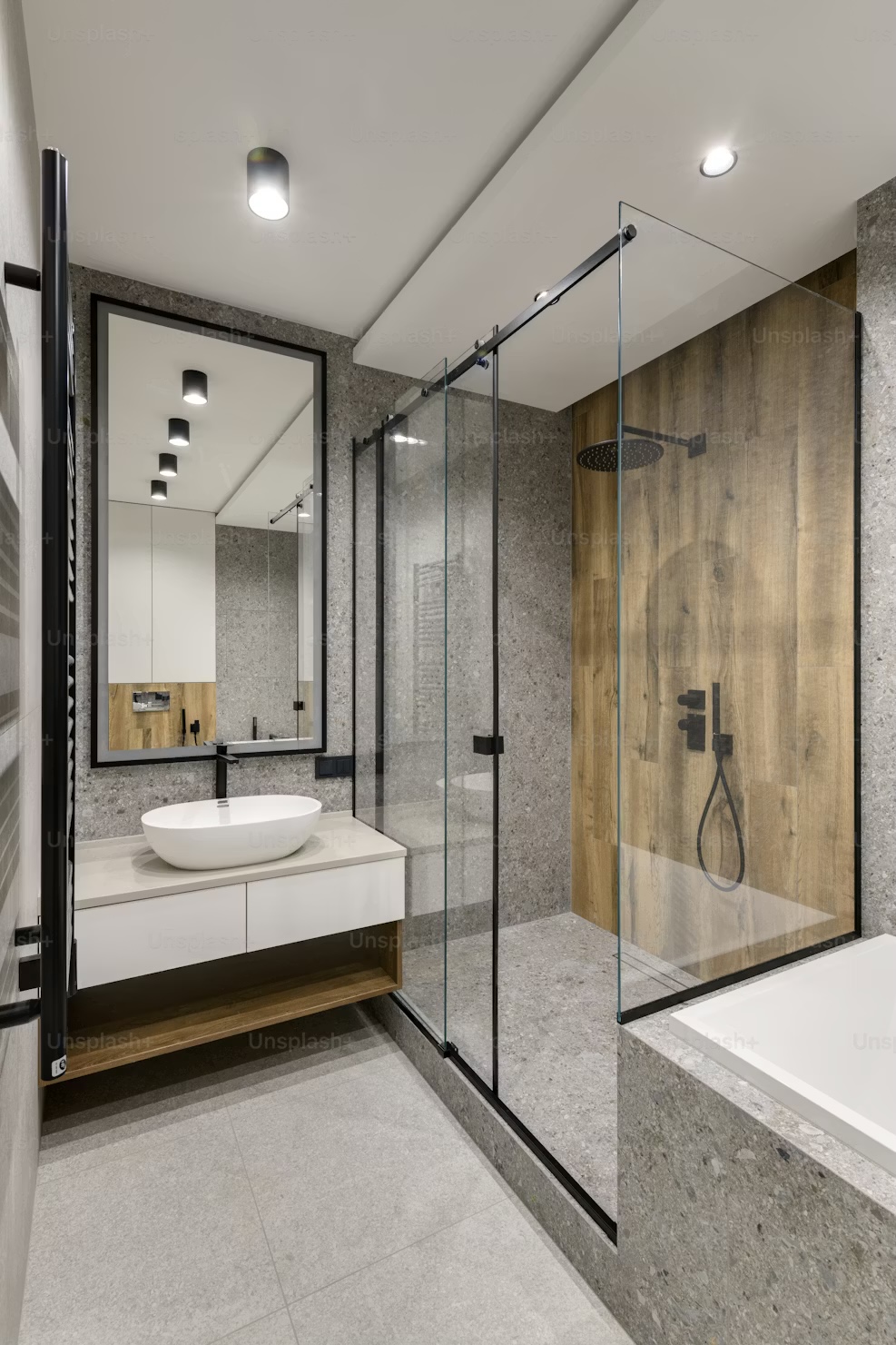
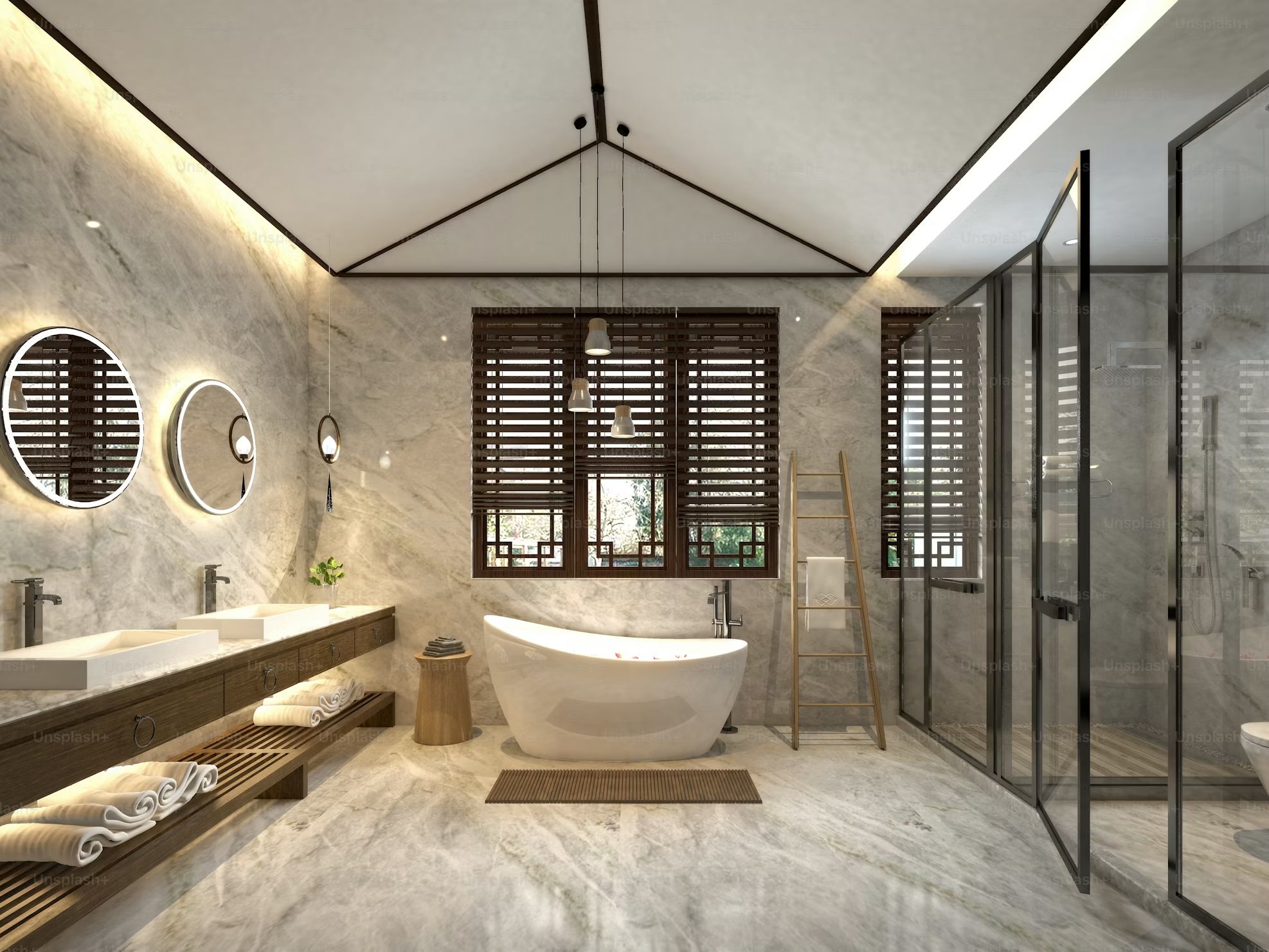
Vision Bathroom Remodeling installs bathroom flooring tile throughout Fort Lauderdale and Broward County — porcelain, ceramic, natural stone, and luxury vinyl plank. We handle full substrate preparation, waterproofing membranes, tile setting, grouting, and sealing. Every installation is built to withstand South Florida's humidity, and every project comes with a 5-year workmanship warranty. Serving Plantation, Weston, Coral Springs, and all surrounding cities. Call (954) 245-0176 for a free in-home estimate.
Bathroom flooring tile in Fort Lauderdale costs $10–$25/sqft installed for porcelain, $6–$14/sqft for LVP. Porcelain tile is the best long-term choice for South Florida's humid climate.
Choosing bathroom flooring in Fort Lauderdale is different from choosing it in Boston or Denver. South Florida's climate — year-round humidity averaging 75%, summer heat, and frequent heavy rain — creates conditions that will destroy the wrong flooring choice within a few years. Every material decision for a Fort Lauderdale bathroom needs to answer three questions: Is it waterproof? Is it mold and mildew resistant? Does it hold up to humidity without warping, swelling, or delaminating?
Porcelain tile is the gold standard for Fort Lauderdale bathroom floors. With a water absorption rate below 0.5%, it is essentially impervious to moisture. It will not warp, mold, or stain, and it requires virtually no maintenance beyond regular cleaning. Available in every imaginable look — marble, concrete, terrazzo, wood plank, solid color — it is the most versatile and durable option available. Fort Lauderdale building code requires a waterproof membrane under tile in wet areas (shower floors and walls), and Vision installs either RedGard or Schluter KERDI on every project.
Ceramic tile is a budget-friendly alternative to porcelain. It is made from a similar clay body but fired at lower temperatures, resulting in a water absorption rate of 3–7% — higher than porcelain but still acceptable for bathroom floors when properly installed and sealed. Ceramic works well in low-traffic bathrooms or as a powder room floor. Not recommended for shower floors or shower walls where continuous water exposure is the norm.
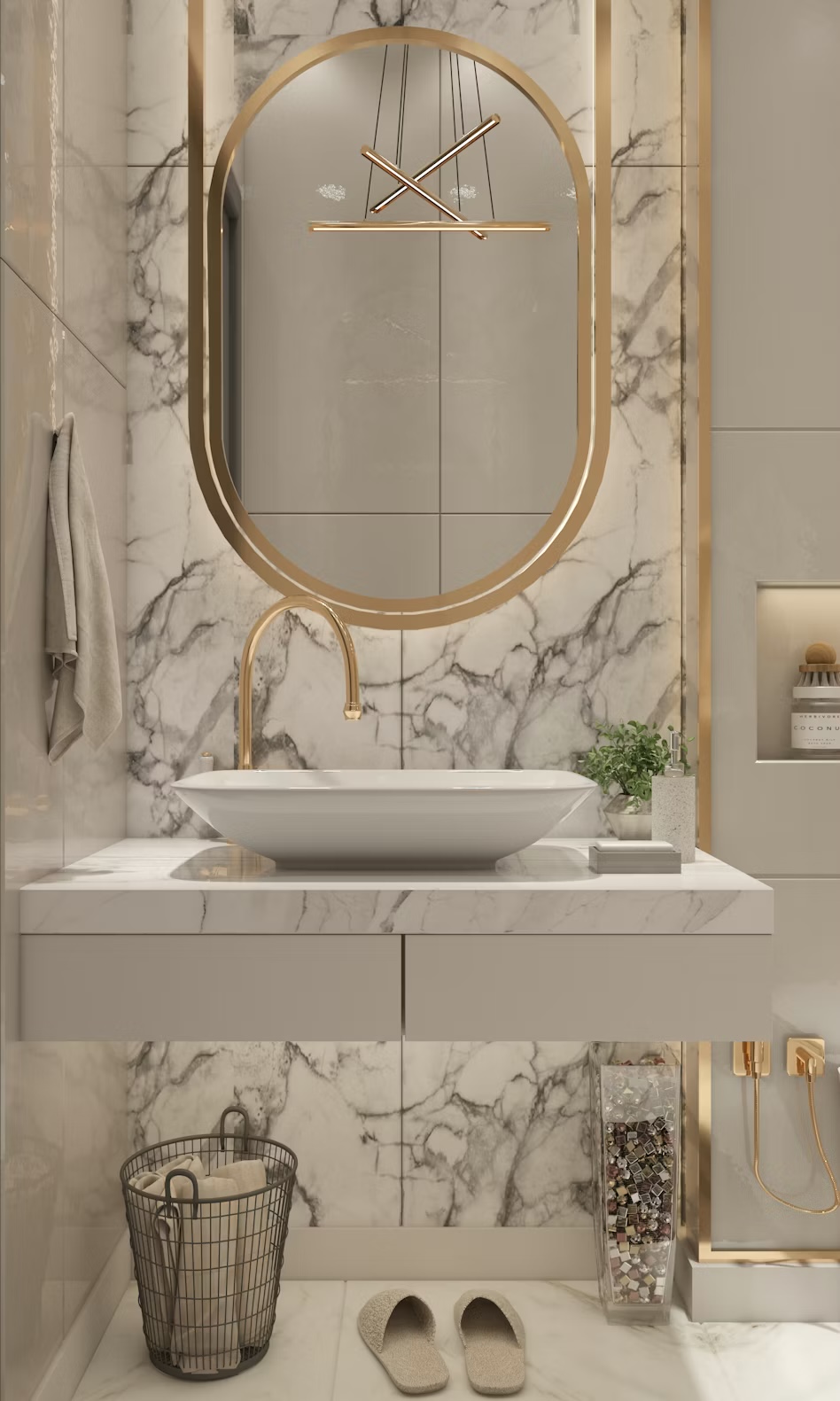
Natural stone — slate, travertine, marble, and limestone — adds warmth and organic character that no manufactured tile can fully replicate. Fort Lauderdale's high-end estates and luxury condos frequently feature marble floors and travertine accents. The trade-off is maintenance: all natural stone must be sealed on installation and re-sealed annually in Fort Lauderdale's humidity. Marble is particularly susceptible to etching from acidic cleaners and bath products. Hardwood flooring is not recommended for Fort Lauderdale bathrooms — even engineered hardwood warps and delaminate when exposed to bathroom humidity levels over time. Luxury Vinyl Plank (LVP) fills the wood-look niche for bathrooms — 100% waterproof, durable, soft underfoot, and available in convincing wood-look finishes.
Porcelain tile dominates Fort Lauderdale bathroom remodels for good reason. Its water absorption rate of less than 0.5% means it is essentially impervious to moisture — a critical property in a climate where bathrooms experience daily humidity levels that would compromise less dense materials. Compare that to ceramic tile at 3–7% absorption and you immediately understand why professionals in South Florida choose porcelain as the default.
Beyond moisture resistance, porcelain offers practical advantages that matter in Fort Lauderdale's lifestyle. It is scratch resistant (important in homes with pets or high foot traffic), does not require sealing, and will not fade in UV light — relevant in Fort Lauderdale where bathrooms with skylights or large south-facing windows are common. Available in large-format sizes that mimic marble, concrete, wood, terrazzo, limestone, and solid color, modern porcelain is virtually indistinguishable from natural materials while outperforming them in durability.
Popular formats in Fort Lauderdale 2025–2026: The 24x48 large-format plank in straight lay is the single most requested tile combination — it creates the appearance of a seamless floor with minimal grout lines, which reads as modern and spacious. The 24x24 square remains popular for floors paired with a contrasting wall tile. The 12x24 works well in smaller bathrooms and showers. The 4x12 subway tile is a classic choice for shower walls that never goes out of style.
For shower floors, Vision uses only porcelain with anti-slip ratings of R10 or higher (R11 for high-risk wet areas). Slip resistance is measured on the R scale — R9 is the minimum for dry interiors, R10 for wet areas, R11 for wet areas with slopes. Many beautiful large-format porcelain tiles that look stunning on a bathroom floor are not appropriate for shower floors because their slip resistance rating is too low. Vision always specifies the correct slip class for each surface. See our quartz countertops page for countertop pairing options that complement Fort Lauderdale's most popular porcelain floors.
The pattern you choose affects not only aesthetics but also installation time, material waste, and overall cost. Here are the patterns Vision installs most frequently in Fort Lauderdale bathroom remodels, from simplest to most complex.
Straight lay (grid) is the most popular pattern for large-format tile in Fort Lauderdale. Tiles are set in a true grid with all joints aligned — horizontally and vertically. This maximizes the visual impact of large-format tile (24x48 or larger) by making the floor look like a single continuous slab. It is the most material-efficient pattern (minimal waste) and the fastest to install, which keeps labor costs down.
Brick bond (offset) is the standard pattern for subway tile and remains one of the most popular choices for shower walls throughout Fort Lauderdale. Each tile is offset 50% from the row below, creating the familiar running bond pattern seen in classic New York subway stations and in almost every bathroom remodel from the 1960s through the present. A 1/3 offset bond is a slight variation that creates a more dynamic look while reducing lippage risk on longer tile formats.
Herringbone works at any scale — from 2x4 mosaic pieces to full 4x12 planks — and remains one of the most timeless patterns in bathroom design. Tiles are set at 45-degree angles to each other, creating a V or zigzag pattern. Herringbone adds visual movement and direction to a floor, making a small bathroom feel larger. It is more material-intensive than straight lay (expect 10–15% more waste) and requires more labor, so it adds cost.
Chevron is herringbone's more refined cousin — tiles are cut at an angle so the joints align perfectly in a continuous V pattern rather than a stepped zigzag. True chevron requires custom-cut tile and is one of the most labor-intensive patterns available, making it a premium choice for Fort Lauderdale master bathroom floors. Diagonal / diamond sets square tiles at 45 degrees to the room walls, adding visual movement and the illusion of more space — particularly effective in narrow bathrooms. Requires more cutting at the perimeter and adds waste.
Versailles pattern uses a mix of four different tile sizes (typically 24x24, 12x24, 12x12, and 6x12) arranged in a repeating pattern that originated in European palace floors. It is most commonly seen in Fort Lauderdale's older Mediterranean Revival and Tuscany-inspired estates in areas like Victoria Park and Rio Vista. Installation is complex — each piece must be individually measured and cut — making this one of Vision's most skilled installations.
Large-format floor-to-ceiling is the newest and most dramatic look arriving in Fort Lauderdale luxury bathrooms in 2025–2026. The same 24x48 or 32x64 tile runs from floor to ceiling on both walls and the floor, with grout lines aligned across all planes. The effect is a seamless, ultra-modern space that appears to be carved from a single slab of stone. This approach requires laser-perfect walls, precision leveling, and large-format-specific installation techniques to prevent lippage and cracking.
Shower walls and shower floors have different technical requirements — and selecting tile without understanding these requirements is how homeowners end up with slippery shower floors or cracked grout joints within a year of installation.
Shower floor tile must have texture. The anti-slip rating (R-value) for shower floors should be R10 or higher — this means the tile surface has enough texture to provide grip when wet. Large-format tiles (24x24 or larger) are typically not appropriate for shower floors because their surface is too smooth and their size makes proper slope-to-drain difficult. Mosaic tile (2x2, 1x1, penny tile, or hexagonal) is the preferred choice for shower floors because many small tiles equal many grout joints, and those grout joints provide excellent grip. Vision uses only R10-rated or higher tile for any surface a foot stands on in wet conditions.
Shower wall tile has different requirements. The primary concern on walls is managing thermal expansion — tile and substrate both expand and contract with temperature changes, and if grout joints are too tight or too wide, cracks appear. Grout joints under 1/8 inch require unsanded grout; joints 1/8 inch and wider use sanded grout. For large-format wall tiles (24x48), Vision uses a minimum 1/16 inch joint with unsanded grout to accommodate natural movement.
Recommended tile combinations Vision installs most often in Fort Lauderdale:
Grout selection matters enormously in Fort Lauderdale. Standard cement grout absorbs moisture, stains over time, and grows mold and mildew in South Florida's humidity. Vision recommends epoxy grout for all Fort Lauderdale bathroom installations — it never stains, never molds, never requires sealing, and outlasts cement grout by decades. The upfront cost is slightly higher, but the long-term performance in South Florida's climate is dramatically superior.
Fort Lauderdale's average relative humidity is 75% year-round and regularly exceeds 85% in summer. Cement grout in a bathroom without proper waterproofing and ventilation will show mold growth within 12–18 months. Epoxy grout eliminates this problem entirely — Vision uses it on every Fort Lauderdale installation as standard practice.
Luxury Vinyl Plank has become a serious option for Fort Lauderdale bathroom floors over the past five years, and for the right project, it makes excellent sense. LVP is 100% waterproof through its entire thickness — not just the surface — which means it will not be damaged by standing water, humidity, or steam. It is also significantly softer underfoot than tile, which matters in a bathroom where you are standing barefoot on cold mornings.
When LVP makes sense in Fort Lauderdale: Rental properties are the primary use case — LVP is durable enough for tenant use, easy to replace a single plank if damaged, and costs significantly less than tile. Guest bathrooms or powder rooms with low moisture exposure are also good candidates. Bathrooms that flow into living spaces benefit from LVP because it can run continuously from the bathroom floor into the living room without a threshold — a common request in Fort Lauderdale open-concept homes. For a more complete comparison, see our bathroom remodeling cost guide.
LVP limitations in Fort Lauderdale bathrooms: Commercial-grade LVP (12 mil wear layer or above) is required for bathroom installations — Vision never installs residential-grade LVP in bathrooms because the thinner wear layer is not designed for sustained moisture exposure. Even commercial LVP should not be used in the shower itself — only on the bathroom floor outside the shower enclosure. LVP can also delaminate if improperly installed, particularly at edges or transitions where water can penetrate under the plank. Vision seals all LVP edges with silicone at floor-to-wall transitions.
Vision Bathroom installs both porcelain tile and LVP, and we do not have a financial incentive to push one over the other. During your free consultation, we will give you an honest recommendation based on your budget, your use case, and your long-term plans for the property.
Substrate preparation is the most important step in any tile installation — and the one most often skipped by contractors looking to cut corners. Vision's tile team inspects and prepares every substrate before a single tile is set. For shower walls, we install either cement board (HardieBacker or Durock) or Schluter KERDI membrane — both create a rigid, waterproof surface that tile can bond to permanently. For bathroom floors, 3/4-inch cement board is screwed into the subfloor at 6-inch intervals to eliminate any flex that would crack tile or grout over time.
Waterproofing is mandatory under all shower tile in Fort Lauderdale and is required by Florida Building Code. Vision uses RedGard liquid waterproofing membrane or Schluter KERDI sheet membrane on all shower floors and walls — applied before any tile goes down. KERDI is Vision's preferred system for full shower installations because it bonds directly to the tile without a mortar bed, creates a completely waterproof assembly from day one, and carries a manufacturer's warranty. This is critical in Fort Lauderdale's climate where water intrusion behind tile causes structural damage and mold growth that is expensive to remediate.
Layout planning is done before any tile is cut. Vision's tile team snaps chalk lines on the floor to establish the tile grid, confirms the starting point minimizes small cut pieces at the perimeter, and dry-lays a section of floor tile to verify the pattern before mixing any mortar. For large-format tile (24x48), we use a laser level to confirm the floor is within the 1/8-inch flatness tolerance required — any high or low spots are corrected with self-leveling compound before tile is set.
Lippage control is the standard of quality that separates professional tile installation from amateur work. Lippage is when adjacent tiles are not perfectly flush — one edge is higher than the other. On large-format tile, even 1/16-inch lippage is noticeable and creates a tripping hazard. Vision uses tile leveling clips and spacers on all large-format installations to maintain a maximum 1/8-inch variation across the field. For our full bathroom remodeling projects, we include tile installation in the fixed-price proposal with no surprises. See our cost guide for complete pricing.
Tile work for a standard bathroom typically takes 4–7 days including substrate prep, waterproofing, tile setting, cure time, and grouting. Vision's in-house tile team handles every step — no subcontractors.
No travel fees throughout Broward County. Free in-home estimates available 7 days a week.
Free in-home estimate. Fixed-price proposal. Licensed tile installation in Fort Lauderdale and all of Broward County. 5-year workmanship warranty on every project.